security clearance revocation, Tulsi Gabbard Russia investigation, intelligence community accountability
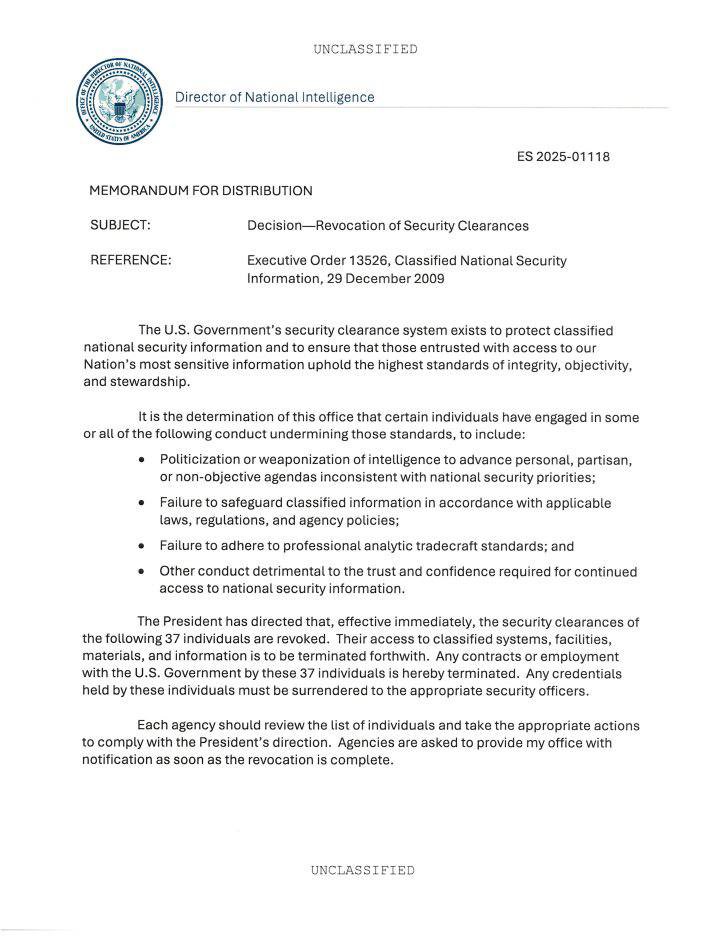

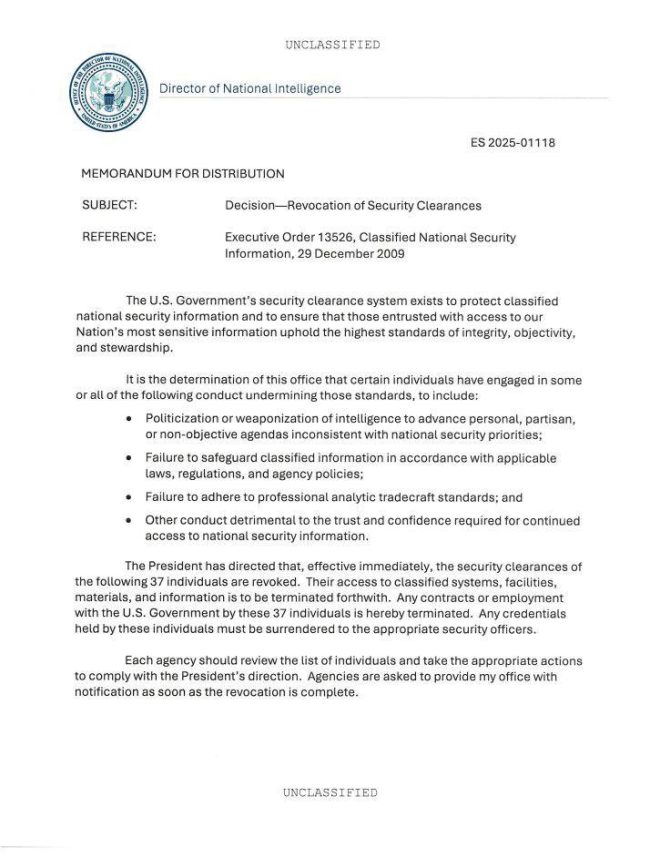
IMPORTANT: Here’s the full list of 37 security clearances that DNI Tulsi Gabbard revoked from individuals involved in the Russia-gate hoax:
Andrew Cedar
Andrew P. Miller
Benjamin A. Cooper⁰Beth E. Sanner
Brett M. Holmgren⁰Charles A. Kupchan
Christopher Center
Corinne A.… pic.twitter.com/3GoG88ObGl
- YOU MAY ALSO LIKE TO WATCH THIS TRENDING STORY ON YOUTUBE. Waverly Hills Hospital's Horror Story: The Most Haunted Room 502
— Benny Johnson (@bennyjohnson) August 19, 2025
Important: Full List of 37 Security Clearances Revoked by DNI Tulsi Gabbard
In recent news, DNI Tulsi Gabbard made headlines by revoking security clearances from 37 individuals linked to the controversial Russia-gate investigation. This bold move has sparked conversations around accountability and transparency in government operations.
The list includes notable names such as Andrew Cedar, Andrew P. Miller, and Benjamin A. Cooper, among others. Each of these individuals had roles in the investigation that many have critiqued as politically motivated. By revoking their clearances, Gabbard aims to restore integrity within intelligence agencies and emphasize the need for unbiased conduct in national security matters.
The Implications of Revoked Clearances
Revoking security clearances is a significant action that can impact careers and access to classified information. For the individuals affected, this decision can hinder their future opportunities in government or private sectors that require high-level security access. The ramifications of such a sweeping action raise questions about the motives behind the Russia-gate probe and the accountability of those involved.
Why This Matters
The revocation of these clearances signifies a potential shift in how intelligence operations are conducted and scrutinized. As citizens, understanding these developments is crucial for holding our leaders accountable. It also highlights the ongoing debate about the intersection of politics and national security.
For those interested in a deeper dive, you can view the original tweet from Benny Johnson, which shares the full list and further context about Gabbard’s decision. Understanding these dynamics is essential for anyone invested in the future of American politics and governance.
Stay informed about such key developments, as they shape the landscape of our political system and national security.